
Gen Z brand discovery: Social is the new search
Updated: 2 days ago
Social media platforms are now brand discovery hubs, and search engines are now mid-funnel. Learn how to meet savvy consumers everywhere they search.

Gen Z and millennials increasingly discover brands on social media, not search engines. Social platforms, creators, and communities have become where consumers first meet new products. Google and Bing are now where they go to confirm what they’ve already found. Brands that build awareness upstream, before consumers search, pay less for bottom-funnel conversions.
Need efficiency in your paid media plan? Save money on lower-funnel media spend by building awareness and demand for your brand among new consumers before they search.
Key Takeaways
44% of Gen Z discover new brands on social media every day.
46% of Gen Z and 35% of millennials prefer social media over traditional search engines, according to a 2024 Forbes Advisor survey of 2,000 Americans.
Only 64% of Gen Z use search engines for brand discovery, compared with 94% of Baby Boomers.
Establishing brand recognition early in the consumer journey reduces the premium brands pay for bottom-funnel conversions.
What is discovery-driven demand?
Consumers, especially Gen Z, are increasingly discovering brands without actively seeking them, a process WARC calls discovery-driven demand.
The consumer journey isn’t a straight line anymore. It’s a multidimensional, curiosity-driven web shaped by discovery-first platforms.
We’ve found that establishing brand recognition earlier in the journey dramatically reduces the premium you’ll pay for bottom-funnel conversions. This upstream approach doesn’t just build awareness; it creates efficiency across your entire media investment.
Why brand discovery matters for your media budget
Businesses that rely on traditional search traffic are being left behind by generative AI tools and shifting consumer behavior.
Don’t wait to be searched for. Position your brand where discovery happens organically, and create demand before consumers even know what they’re looking for!
Is social media the new search engine?
For younger consumers, increasingly, yes. A 2024 Forbes Advisor survey of 2,000 Americans found that social media is rapidly gaining on traditional search engines like Google and Bing for product and trend discovery among Gen Z and millennials.
Only 64% of Gen Z use search engines for brand discovery, a significant decline compared with 94% of Baby Boomers.
Instead, social platforms are becoming primary search tools: 46% of Gen Z and 35% of millennials prefer them over traditional search engines.
A whopping 44% of Gen Z discover new brands on social media daily!

Why do Gen Z and millennials trust social media for brand discovery?
Trust and community. Social networks like Instagram, TikTok, and Pinterest have given voice to influencers and creators who have a credibility with younger generations that traditional marketing lacks.
Ads are nice, but it’s amazing to have a creator who fits the demographics of your target buyer talk about your product.
That’s why partnerships, influencer marketing, and user-generated content are vital to today’s campaigns. Micro and macro communities have formed around these creators, building a sense of authenticity and connection that search engines (and brands) can’t match on their own.

How can brands reach Gen Z where they discover brands?
Here are five ways to reach new consumers everywhere they’re open to inspiration.
1. Optimize for social search and retail search
Apply SEO principles to:
Instagram, where keyword-rich captions perform better than hashtags at reaching people in discovery mode
TikTok, which is ripe for expanding reach and influencing viewers, particularly on its For You page and in search results
Retail media networks, which can pair shopper data with sponsored recommendations more precisely than ever

2. Invest in (and repurpose) visually engaging content
TikTok videos, Pinterest boards, and Social Reach activations spark curiosity and engagement. Pinterest is especially well suited to reaching people who aren’t looking for a particular product but are open to inspiration.
And don’t just tout a product; build a community. Research shows that 60% of millennial consumers make a reactive purchase after experiencing FOMO (fear of missing out), most often within 24 hours. Build the perception that owning your product means belonging to a larger community, and young adult customers will loyally align themselves with your brand.

3. Create new paths to purchase
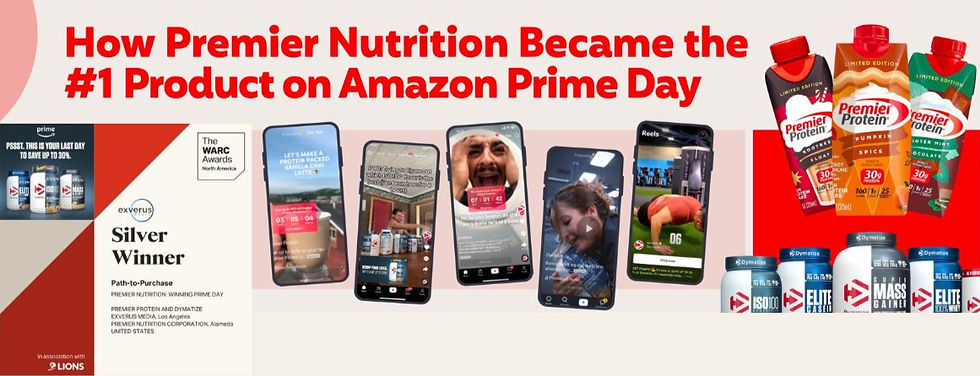
Our award-winning Premier Protein campaigns for Prime Days did just that:
On TikTok and Instagram, we served the kind of influencer content our target audience enjoys to create awareness.
We nurtured consideration and urgency with TikTok’s interactive features.
We attached shoppable links from the social videos directly to Amazon product pages with strong deals, so viewers could follow through and buy.
4. Start the conversation in AI-driven search
To be recommended by AI-driven search, focus less on website click-through and more on product feeds that answer searchers’ natural questions. Also engage meaningfully on Reddit: its content is licensed to train Google’s AI models, and it has a similar deal with OpenAI.

5. Get OOH and IRL
High-impact out-of-home (OOH) media activations are excellent awareness builders that drive branded searches.
John Hoover, SVP at NPRP Media, has the proof:
“OOH media drives 7x more social engagement and search than any other format. An impressive 48% of people exposed to OOH featuring a celebrity or influencer visit the product or brand’s website afterward.”
Case study: The Chosen. To launch The Chosen: Last Supper, the show’s fifth season and first theatrical release, we took over Times Square with Annie Leibovitz’s portraits of the cast. The key art was unveiled live on February 14, 2025, with creator Dallas Jenkins and cast members on site, turning a media buy into a fan event that spread across social media.
The results:
Organic branded search reached 3.8MM in a single month
Brand awareness lifted 4.6x the entertainment category norm
The campaign helped drive 6.1MM ticket sales

Frequently asked questions (FAQs)
How does Gen Z discover new brands? Gen Z discovers new brands mainly through social media, where creators, influencers, and communities introduce products before consumers ever search. According to Forbes Advisor, 44% of Gen Z discover new brands on social media every day.
Is social media replacing Google for search? For younger consumers, partially. Forty-six percent of Gen Z and 35% of millennials prefer social media over traditional search engines. Search engines still matter, but they increasingly serve as a mid-funnel step where consumers confirm what they discovered elsewhere.
What is discovery-driven demand? Discovery-driven demand is demand created when consumers find brands without actively looking for them, through social feeds, creator content, retail media, or out-of-home ads. Brands that build this demand early pay less for bottom-funnel conversions.
How can brands optimize for social search? Brands can optimize for social search by using keyword-rich captions on Instagram, creating content built for TikTok’s search results and For You page, and applying SEO principles to retail media product listings.
Ready to rethink your discovery strategy? Let’s discuss!
For more media strategies, campaigns, and agency news, subscribe to our weekly Paid Media Insights newsletter.
AI Disclosure: We use AI models to efficiently consolidate information from the most trusted industry sources and combine it with our real-world expertise. Every word drafted is carefully reviewed, edited, and confirmed by human eyes and hands for accuracy and quality. All information on exverus.com has been executive-approved and is updated daily.


