Hire a digital ad agency, or buy media in-house? A guide for marketers
Updated: 4h
Before you cut your media agency to save budget, weigh the hidden costs of in-house buying against what a specialist partner brings.

For most brands spending on multiple channels, hiring an external media agency delivers better performance per dollar than an in-house team, because the costs of in-housing (senior talent, tools, and constant retraining as platforms change) are often larger and less visible than agency fees. But in-housing can make sense for brands with a single dominant channel, very high spend, and the budget to retain specialist talent. Many brands land on a hybrid model, depending on their capabilities and goals.
Here are some of the considerations that should guide your thinking process when deciding whether to hire a digital ad agency or build a media buying team in-house:
What an in-house media team really costs
When you cut the agency fee out of your marketing budget, every job it covered moves onto your payroll: senior media strategists cost six-figure salaries (plus approximately 31% more in benefits). Then you need junior media planners/buyers, ad ops specialists, data analysts, platform experts (like Amazon, for example), and the measurement tools a media agency can spread across its whole agency roster.
And bringing media in-house may not even eliminate the agency line item, as Marketing Dive reported in 2023 that 92% of marketers with in-house agencies still work with external agencies in some capacity.
In fact, the biggest champions for in-housing don't claim it to be a money-saver. In the ANA's 2026 State of In-Housing report, only 9% said they view in-housing as a cost-saving alternative to external agencies. The brands that in-house well do it for control and speed, not cost.
When you're conducting your cost-benefit analysis, ask every media agency you're comparing to break down its fees line by line so you can make an informed decision.
The consultant's POV
We know we're a little biased here. So don't take our word for it! Steve Boehler, founding partner at marketing agency consultancy Mercer Island Group, explains:

"It’s incredibly hard for marketers to staff and maintain an outstanding in-house media capability. Platforms and technology change constantly. Best practices today are different from a month ago. Specialized planning tools are needed to plan across platforms. There is no formal career path for the folks that have hands on keyboards. There is no learning from other agency clients. Staffing your own internal media capability may seem like a cost savings, but it often is not. And the actual performance often lags behind an agency’s capabilities."
What a digital ad agency brings to the table
Context
Meta, Amazon, and Google are appealing directly to brands, beefing up their AI-powered campaign optimization abilities to eliminate the need for agencies.
But no single media channel can fully replace digital ad agencies. Why?
Because media channels are ingredients, and agencies are professional chefs.
None of these platforms know what you're doing on the others, or in real life, and they don’t have a deep understanding of:
what your target consumer’s complete purchase journey could look like
your brand’s voice, business challenges, and category positioning
how multiple marketing channels work together for brand and performance
why certain campaigns perform better than others
your business's sales patterns over time
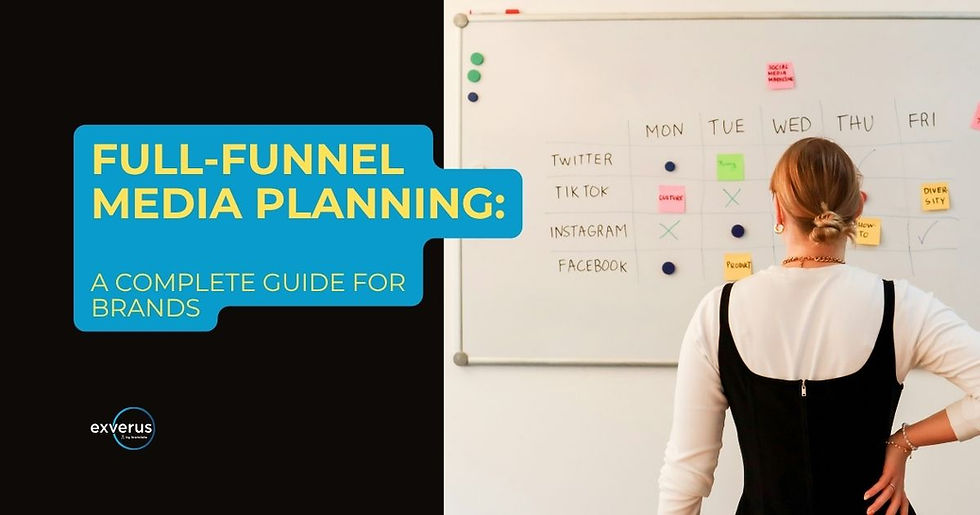
All of this context is absolutely necessary to plan an effective, full-funnel media campaign, evaluate its progress, and make adjustments based on actual sales.
Long-term growth strategies
While immediate ROI metrics can look attractive, brand marketers under pressure to close sales often get short-sighted and overlook the importance of long-term brand-building. This mistake is called short-termism, and it must be avoided to ensure brand success.
Paid media efficiency isn't about eliminating channels -- it's about reaching new consumers everywhere they discover and building swift, elegant paths to purchase.
We go long. Media planners collect deep audience- and competitive-insights to build a bespoke, full-funnel media strategy that guarantees the most bang for your buck.

Creative campaign ideas
Digital ad agencies live at the intersection of creativity and technology, where bold media ideas meet cutting-edge execution to drive real business results. In order to remain at the forefront, we strategically partner with advanced ad tech vendors and publishers to unlock transformative value for our clients.
For example, in March, we partnered with SeenThis to launch a new ad format called Social Reach, which splashes brands’ existing social videos across the open web in PubMatic’s premium Display slots. Our innovation beat Meta Ads' efficiency by 50%!

You can see more of the creative ideas we've brought to life on our Campaigns page.
Sophisticated data analysis
Modern, AI-powered MMM, MTA, and brand measurement capabilities that were once reserved for the biggest high-rollers are now available to brands of all sizes through your media agency partner.
Our in-house media buyers and data analysts use platforms like Keen Decision Systems, Resonate, Skai, and DoubleVerify to justify every recommendation with brand safety and suitability for clients’ peace of mind.
Again, we're not just reporting today's sales performance -- we're evaluating your whole brand's health to ensure continued growth tomorrow and next year.

When in-house media buying makes sense
In-housing isn't altogether a bad idea, just a specific one. It tends to work best for brands where a single channel, such as Paid Search or Amazon, drives most of the business, so a small team can go deep instead of wide.
It helps when spend is high enough that the additional costs of labor and tech are smaller than the fees saved.
It also suits brands with rich first-party data they'd rather keep close to home. As Marketing Dive noted, in-house teams can access a company's first-party data more quickly and securely than external agencies can. It's no coincidence that the early adopters of in-house programmatic buying were mostly digital natives like Netflix and Target, whose deep first-party data gave them a head start.
The strongest reasons to in-house are strategic, not financial. In the ANA study linked above, 53% of respondents said the primary role of an in-house agency is to act as a strategic partner in upstream strategy. If you need to react to sales data by the hour, or agency approval cycles are slowing you down, having the team inside your walls pays off.
Just go in clear-eyed. A successful in-house team needs real career paths, a budget for tools and training, and an honest plan for the work that will stay outside. Brands that check some of these boxes but not all of them usually do best with a hybrid model.

The hybrid media buying model
For many brands, the answer isn't either/or. In a hybrid model, the brand keeps some media functions in-house and hands the rest to a digital ad agency. The split usually follows one of a few lines:
The brand might own strategy, budget, and audience data while the agency handles execution, platform management, and measurement.
It might run the one channel it knows best, such as paid search or Amazon, and outsource everything else.
Or it might keep always-on campaigns internal and bring in an agency for bigger launches and new channels.
The hybrid model has become the norm largely because full in-housing is so hard to staff. In a Digiday survey, 62% of marketers said hiring talent is a challenge for bringing media buying in-house. An agency consultant quoted in the same piece put it plainly: most brands now run a hybrid model because building teams in-house is expensive, and finding the talent is often the problem.
But hybrid only works when both sides can see the same data. Before you divide the work, agree on who owns the platform accounts, the reporting, and the measurement, and make sure your media agency partner gives you full visibility into costs and fees. Otherwise you end up with two teams optimizing in two directions, and nobody with the full picture.
How to decide on a digital ad agency
If you've weighed the costs and decided an outside partner makes sense, for all of your media or just part of it, the pitch process is where you find the right one. Hold every agency to the same five questions:
Industry expertise: What experience do they have in your category or with a similar audience, and can they show examples?
Your actual team: Who will work on your account day to day, and will senior leaders stay involved after the contract is signed?
Staying current: How do they keep up with emerging platforms, AI, and new measurement standards?
Proprietary tools: What data sources, tech platforms, and measurement tools can they bring that you couldn't access on your own?
Transparency: How open are they about media costs, fees, rebates, and preferred vendor relationships?
That last question matters most, because it's the one that makes an honest cost comparison with in-housing possible. If an agency hesitates to answer it, that's your answer.
You'll find these questions on our Services page, and our Guide to the Agency Pitch Process covers how to run a review from shortlist to signed contract.
FAQs
Is it cheaper to buy media in-house than to hire a digital ad agency?
Usually not for brands advertising across multiple channels. Cutting the agency fee moves every job it covered onto your payroll, including senior strategists, buyers, analysts, and the tools an agency spreads across its client roster. In the ANA's 2026 State of In-Housing report, only 9% of respondents said they view in-housing as a cost-saving alternative to external agencies.
When does in-house media buying make sense?
In-housing works best for brands where a single channel drives most of the business, spend is high enough to justify dedicated talent and tools, and rich first-party data gives the team an edge. It can also make sense when speed and control matter more than cost.
What is a hybrid media buying model?
In a hybrid model, a brand keeps some media functions in-house and hands the rest to a digital ad agency. Common splits include owning strategy while the agency executes, running one core channel internally, or keeping always-on campaigns in-house while an agency handles launches and new channels.
Can AI tools from Meta, Google, and Amazon replace a media agency?
Platform AI can optimize campaigns within its own walls, but no single platform sees what's happening on the others, or in your business. A media agency connects the full picture: your customer's purchase journey, how channels work together, and how media drives actual sales over time.
What should I ask a digital ad agency before hiring them?
Ask about their industry expertise, who will actually work on your account, how they stay current, which tools and data they bring that you couldn't access on your own, and how transparent they are about costs, fees, and rebates. If an agency hesitates on that last question, that's your answer.
About the author

Talia Arnold is the Co-Founder and Managing Partner of Exverus by Brainlabs, an independent, full-funnel media agency serving both challenger brands and Fortune 500s. With 22 years in advertising, media planning, and entrepreneurship; Talia was named a 2025 CampaignUS Inspiring Women in Media and a 2024 ADWEEK Media All-Star.
If you’re curious about what fresh recipes our chefs could cook up for you – let’s talk.
For more advertising news and tips, join our free weekly Paid Media Insights newsletter.
AI disclosure: We use AI models to quickly consolidate information from top industry sources and combine it with our real-world expertise. Every word drafted is carefully reviewed, edited, and confirmed by human eyes and hands for accuracy and quality. All information on exverus.com has been executive-approved and is updated daily.